

- Key Takeaways
- Comprehensive Guide to Safety Signs and What They Mean
- Introduction
- Understanding Safety Signs
- Types of Safety Signs and Their Meanings
- Colour Coding and Shapes of Safety Signs
- Placement and Visibility of Safety Signs
- Compliance with Safety Regulations
- Best Practices for Using Safety Signs
- Summary
- Frequently Asked Questions
Understanding safety signs and what they mean is crucial for preventing accidents and staying compliant with safety regulations. This guide will explain different safety signs and what they mean so you can recognise and react to them effectively.
Key Takeaways
- Safety signs are essential for conveying critical information about workplace hazards, thereby preventing accidents and promoting a safer environment.
- Different types of safety signs, including prohibition, warning, mandatory, and emergency exit signs, serve distinct purposes and must be understood to ensure effective communication of safety measures.
- Regular maintenance, proper placement, and compliance with regulatory standards are crucial for maintaining the visibility and effectiveness of safety signs in the workplace.
Comprehensive Guide to Safety Signs and What They Mean
Safety signs play a crucial role in occupational safety, designed to convey important information clearly to ensure everyone within a workplace understands potential hazards and necessary precautions. The primary objective of safety signs is to prevent accidents and mitigate risks, thereby creating a safer work environment for all.
Effective safety signs must be clear and easy to understand for anyone, regardless of language or background. This clarity is achieved through universally recognised symbols and straightforward language, enhancing comprehension and ensuring the message is effectively conveyed.
Safety signs come in various forms, indicating prohibitions, warnings, mandatory actions, and emergency exits. Unambiguous directions from these signs help maintain safety and compliance with regulations. The proper implementation and understanding of these signs are vital for minimising accidents and promoting a culture of safety in any workplace.
In workplaces where health and safety are paramount, safety signs serve as essential components of the safety strategy. They constantly remind employees of potential hazards and necessary precautions, fostering a proactive safety approach. Proper utilisation of safety signs can significantly enhance safety protocols and ensure a safer working environment.
Introduction
Safety signs are foundational to any effective workplace safety program, providing visual cues that help prevent accidents and injuries by clearly indicating risks and required actions. Proper implementation of these signs can significantly reduce the likelihood of accidents, ensuring a safer environment for both employees and visitors.
Understanding the different types of safety signs and their meanings is crucial for effective communication of safety measures and compliance with health and safety regulations.
Understanding Safety Signs
Safety signs are integral to maintaining a safe work environment, serving as visual signals that communicate important safety information and guide individuals on avoiding potential hazards. Their role in preventing accidents and ensuring health and safety is paramount, providing clear indications that help reduce the risk of injury.
What are Safety Signs?
Safety signs are pictograms designed to convey critical safety-related information. Their main function is to avert accidents and injuries by delivering straightforward and concise safety messages.
These signs play a crucial role in informing individuals about potential hazards and the necessary precautions to take, thereby creating a safer working environment with health and safety signs.
Why Are Safety Signs Important?
Safety signs communicate safety instructions and warnings effectively, especially when risks cannot be entirely eliminated through other measures. Prohibition signs, for example, protect employees from engaging in hazardous behaviour that could lead to accidents.
Proper installation and understanding of these signs increase safety and compliance, fostering a safer workplace.
Types of Safety Signs and Their Meanings

Safety signs are categorised into different types, each serving a unique purpose in maintaining workplace safety. The primary categories include Prohibition, Warning, Mandatory, and Emergency Exit signs, each playing a critical role in informing employees about potential hazards and required actions to mitigate risks.
Understanding these categories helps organisations use the most appropriate signs to enhance safety and compliance.
Prohibition Signs
Prohibition signs indicate actions that are not allowed, typically represented by a circular red band with a diagonal line through it to ensure clear communication.
Prohibition signs prevent unsafe behaviours, helping maintain a safer working environment.
Warning Signs
Warning signs alert individuals to potential hazards or dangers, characterised by their equilateral triangle shape, which quickly draws attention to possible risks. Warning signs increase awareness, playing a vital role in preventing accidents and ensuring workplace safety.
Mandatory Signs
Mandatory signs indicate specific actions required to comply with safety regulations. These signs are typically blue with a white pictogram on a blue background, ensuring clear communication of required actions. Clear instructions from mandatory signs help maintain compliance and enhance safety.
Emergency Exit Signs
Emergency exit signs guide individuals to safety during emergencies, typically green with white symbols to ensure easy recognition even in stressful situations.
Emergency exit signs enhance the effectiveness of evacuation procedures and ensure safe escape routes are followed.
Fire Safety Signs
Fire safety signs identify the locations of fire alarms and fire fighting equipment, ensuring quick location of necessary equipment in the event of a fire alarm, thus improving response times and enhancing overall fire safety. Additionally, fire equipment signs and fire safety instruction signs play a crucial role in this process. UK fire safety signs are essential for effective communication in emergencies.
Colour Coding and Shapes of Safety Signs
Standardised colours and shapes greatly enhance the effectiveness of safety signs, aiding in quick recognition and understanding. Different colours and shapes convey specific meanings, ensuring safety messages are easily identifiable and understood.
This systematic approach helps individuals quickly recognise the type of warning or instruction being communicated, thereby improving overall safety.
Red Safety Signs
Red safety signs indicate prohibition and the need to stop or evacuate, alerting individuals to immediate dangers that require urgent attention, such as fire alarms or emergency shutdowns.
Red safety signs effectively convey critical messages, helping maintain a safe environment and ensuring compliance with safety regulations.
Yellow Safety Signs
Yellow safety signs indicate potential hazards, prompting caution and requiring careful attention. These warning safety signs serve as caution indicators, alerting individuals to risks in specific areas and encouraging necessary precautions.
Yellow safety signs raise awareness of potential hazards, helping prevent accidents and ensure workplace safety.
Blue Safety Signs
Blue safety signs signify mandatory actions for safety compliance, instructing individuals on specific behaviours required to maintain safety, such as wearing personal protective equipment or following safety procedures. Blue safety signs enforce compulsory actions, helping ensure safety protocols are followed, and workplace safety is maintained.
Green Safety Signs
Green safety signs mark safe areas such as emergency exits or first aid locations, promoting safe evacuation routes. These signs indicate safe conditions and resources, helping individuals find safe escape routes and access first aid during emergencies.
Green safety signs mark critical areas, enhancing overall safety and ensuring necessary resources are easily accessible.
Placement and Visibility of Safety Signs
The placement and visibility of safety signs are crucial for their effectiveness in communicating safety messages. Properly positioned signs significantly enhance the likelihood of individuals noticing and heeding the safety messages.
Strategic placement of safety signs in high-risk areas without obstruction is essential for maximising their impact and preventing accidents.
Appropriate Placement
Appropriate placement of safety signs involves considering viewing distance to ensure readability and recognition from afar. Signs should be positioned at eye level, approximately six feet high, to maximise visibility and accommodate varying human dimensions.
Additionally, hazard signs should be placed near the actual hazards they indicate without causing obstruction.
Ensuring Visibility
Regular cleaning is essential to maintain the visibility of safety signs by removing dirt, snow, vehicles, and equipment that may obstruct the view. Avoid clustering multiple safety signs together to prevent overwhelming employees and reduce message effectiveness.
Clear and easily recognisable shapes, colours, sizes, and symbols of safety signs are crucial for effectively communicating important safety information.
Compliance with Safety Regulations
Compliance with safety regulations is crucial for maintaining a safe work environment. Safety signs assist organisations in adhering to health and safety regulations, including the Health and Safety (Safety Signs and Signals) Regulations 1996.
Compliance with these regulations demonstrates a commitment to employee safety and helps avoid legal penalties, making it essential for any organisation.
Relevant Standards
Safety signs must comply with international standards to ensure consistency and effectiveness. For instance, the BS EN ISO 7010 regulations provide guidelines on design and use. In the UK, the Health and Safety (Safety Signs and Signals) Regulations 1996 apply to all workplaces, mandating clear and effective safety signage.
These standards ensure safety signs provide essential safety information and clear labelling as required.
Regular Reviews and Updates
Regular reviews of safety signs ensure they remain effective and relevant in conveying safety messages. Persistent checks allow the identification of outdated or damaged signs needing immediate attention. Updating safety signs to conform to the latest regulations protects the organisation legally and ensures the safety of all individuals on the premises.
A regular review schedule helps track and update safety signs efficiently.
Best Practices for Using Safety Signs
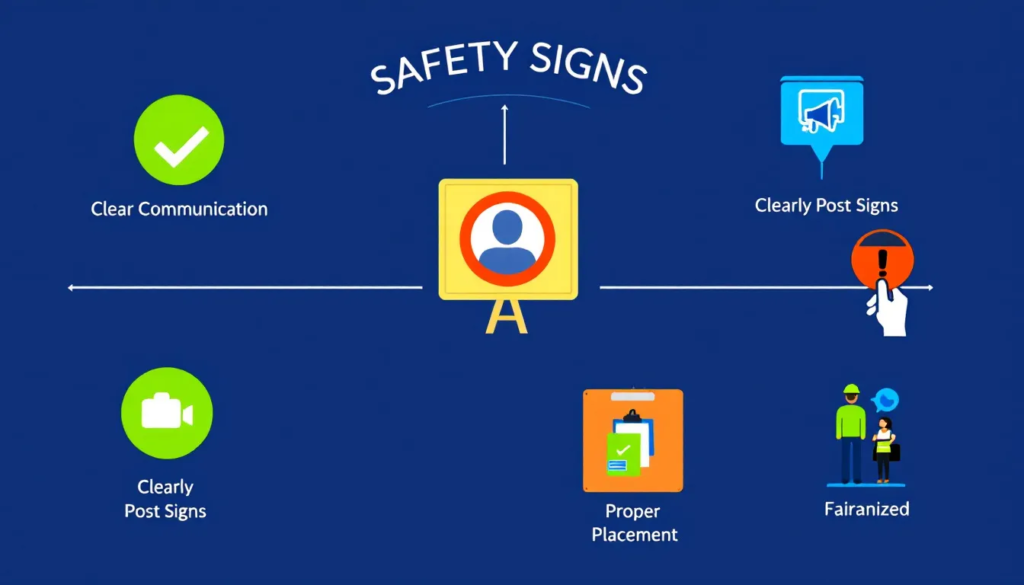
Adopting best practices for using safety signs significantly enhances workplace safety. Regular training and awareness programs keep the importance of safety signs fresh in employees’ minds. Effective safety signage boosts employee confidence and productivity by creating a secure work environment.
Prioritising critical information on safety signs enhances quick comprehension and ensures effective communication of the safety message.
Conducting Risk Assessments
Comprehensive risk assessments are crucial for identifying specific hazards necessitating safety signs. Engaging employees in identifying hazards provides valuable insights into workplace risks. Regular assessments determine if safety signs need updating based on evolving workplace risks, ensuring continued compliance with safety regulations.
Training and Awareness
Integrating safety signs into workplace training reinforces safety protocols and ensures employees understand the meanings and importance of these signs. Hands-on training sessions enhance practical understanding and recognition of safety symbols, fostering a culture of safety and increasing awareness of potential risks.
Visible safety signs play a crucial role in maintaining high levels of safety awareness among employees.
Maintenance and Inspection
Regular maintenance and inspection of safety signs are vital for keeping them legible and effective. Visual inspections ensure signs remain visible and convey the intended message.
Checks should focus on placement and visibility, ensuring safety signs continue to effectively communicate important information and prevent accidents.
Summary
Safety signs are indispensable elements of workplace safety, playing a critical role in preventing accidents and ensuring compliance with safety regulations. By understanding the different types of safety signs, their meanings, and best practices for their use, organisations can significantly enhance their safety protocols. Regular reviews, maintenance, and training are essential to ensure that safety signs remain effective. Prioritising safety signage not only protects employees but also fosters a culture of safety, ultimately leading to a safer and more productive work environment.